Essay
The most likely ad
El anuncio más probable
I gave four image models the same one-line brief. Nothing in it said where anything goes. Eighty ads later, each model had a favorite ad, and kept making it.

· 8 min read

I gave four image models the same one-line brief and got 80 ads. Each model has a favorite ad and repeats it: one made the same layout 20 of 20, and 62 of 80 put the words at the top, centered. Real coffee shops ran seven ads in 24 with no words at all. The machines, zero in 40.
Cuatro modelos de imagen, el mismo brief de una línea, 80 anuncios. Cada modelo tiene un anuncio favorito y lo repite: uno hizo la misma estructura 20 de 20, y 62 de 80 ponen las palabras arriba, al centro. Las cafeterías reales corrieron siete anuncios de 24 sin una palabra. Las máquinas, cero de 40.
The experiment
Last time I counted 246 real ads, and 108 of them put the words at the top, centered, over a picture. I wrote that this layout was now training data and bet the tools would give it back on request. So I asked the tools.
Two briefs, one line each, a made-up brand and a headline the ad had to carry. No platform, no layout, no photo, no color, no mood. That has a cost: Anderson, Shah and Kreminski found in 2024 that short briefs give "samey" results, because the model fills every blank with its most likely value. I used one anyway. It is the brief a marketing person types.
Four AI image models from four labs: Seedream 5 Pro, GPT Image 2.5, Recraft V4.1 and Google's Nano Banana Pro, the image model behind Gemini. October 13, 2026, ten images per model per brief, 80 in all, same text word for word, nothing thrown out. I read them blind, the way I read the 246: files renamed, key sealed, each ad sorted into one of fourteen layouts. Andrés re-read 16 blind and we agreed on 12; where he measured a frame I had missed, his reading stands. The Nano Banana images came after the key for the first 60 was open, so I knew the tool when I read them. Quality is not measured: "slop" is a complaint about the finish, and this is about what the tool does before the finish.
Brief 1 · Shiftmoor (B2B SaaS)
The brief, exactly as sent:
Make a square social media ad for Shiftmoor, a scheduling tool for field crews. The ad must include the brand name "Shiftmoor" and this headline, written exactly as shown: "Tomorrow's crews, sorted tonight."
Figure 1: 26 real B2B software ads from 13 companies on top; 40 generated below, four lines of ten, one per model. Read the real row first, then each line on its own.
The real ads · 26 real B2B SaaS ads from 13 brands
17 of 26 in one layout: framed image · copy top centered · 11 brands · 8 layouts in all
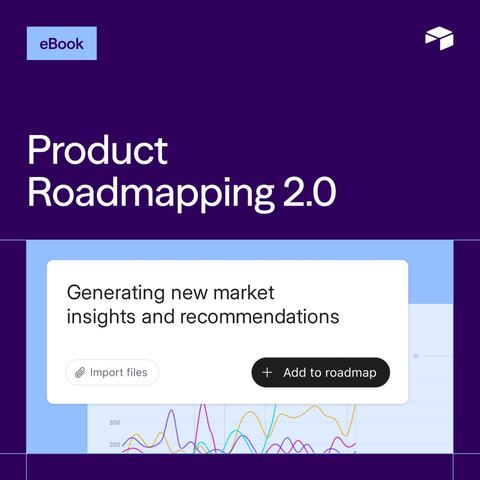


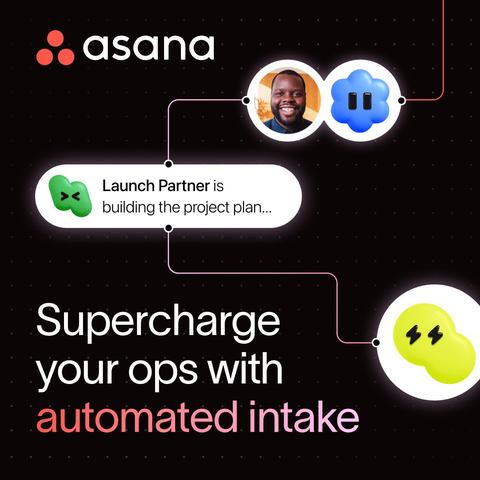









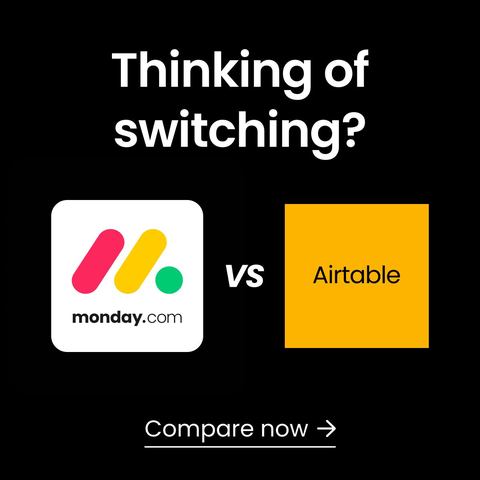



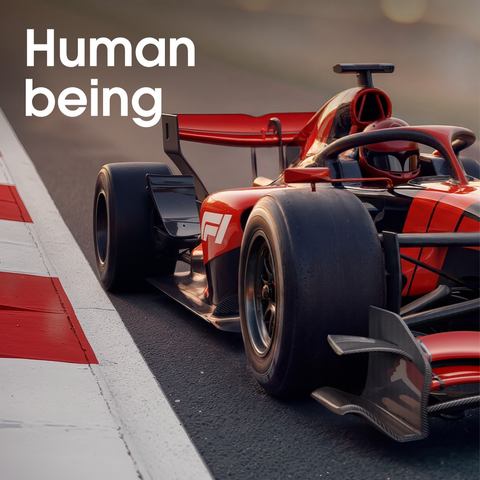


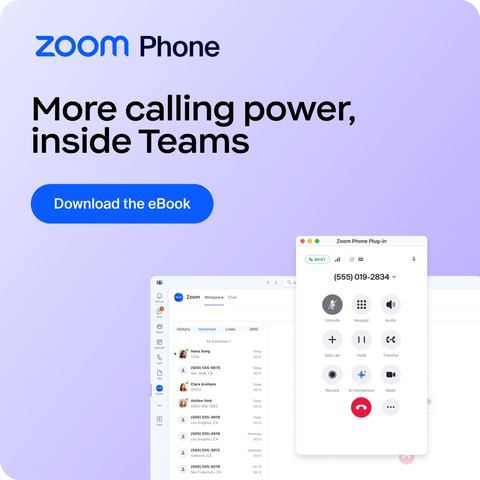

LinkedIn Ad Library, United States · n = 26 · image ads only, two per brand, as counted in the second essay
Figure 1. Shiftmoor, B2B SaaS: the 26 real ads and ten outputs per model. Pick a stop; nothing was discarded.
Layout. The real row is the deepest pile in my archive: 17 of 26 in one layout, picture framed, words at the top, centered. The 40 generated, mixed, use eight layouts and the fullest holds 16 of 40, a shallower pile. But nobody uses four tools. Line by line: GPT Image 2.5 one layout, ten of ten; Recraft V4.1 eight of ten; Seedream 5 Pro six layouts in ten.

FIGURE 5a · SaaS, the line chance does not cross.
One cell per ad: real SaaS (26) above, generated SaaS (40) below. Black cells are the pile's fullest layout, filled from the left. The orange outline is where chance stops: the 95th percentile of 20,000 random draws over the 13 layouts in use.
Chance line 6 and 8; the piles reach 17 of 26 and 16 of 40.
Figure 6a: every ad as a strip of its five main colors, the real row on top and each model's ten under it; under each strip, five marks for what is in the ad.
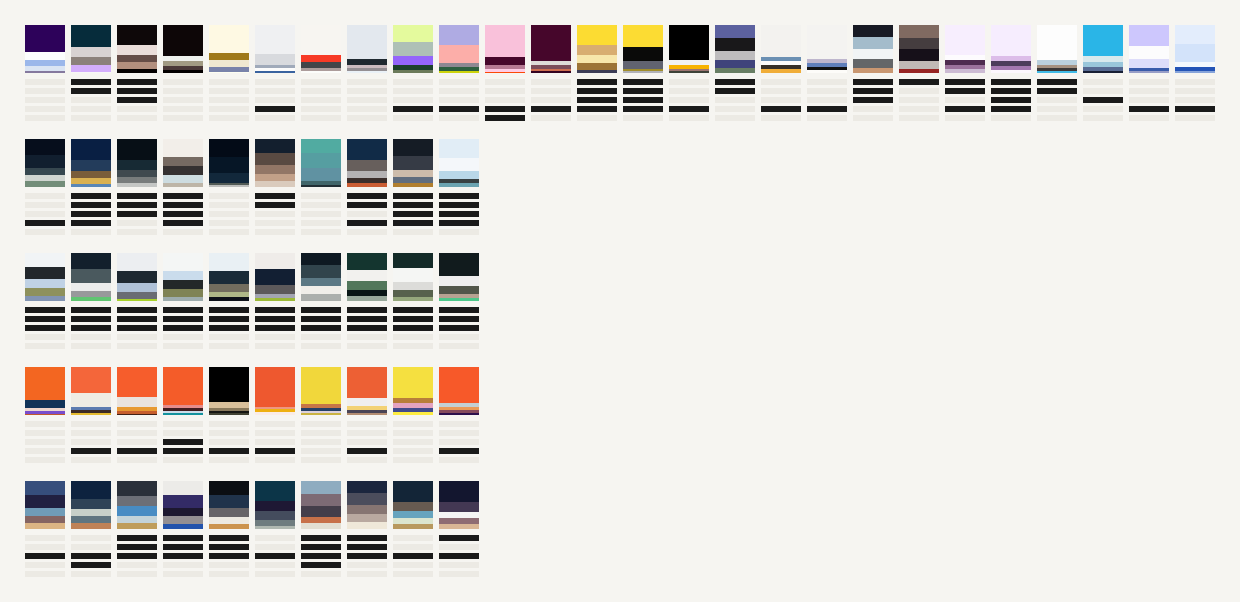
FIGURE 6a · SaaS, color and elements, real beside machine.
Every ad is one strip: its five dominant colors stacked by share, the largest on top; under it, five bars, black when the ad has the element: photograph, person, device screen, CTA button, serif headline. The real row of 26, then ten per model, top to bottom Seedream 5 Pro, GPT Image 2.5, Recraft V4.1, Nano Banana Pro.
Real: neutral in 14 of 26, 7 dominant hues. Nano Banana cool 10 of 10, Recraft warm 9 of 10. Device screen: 6 of 26 real, 10 of 10 GPT Image, 10 of 10 Nano Banana.
Color. The real row has no color: 14 of 26 are neutral and the dominant tones go seven ways. Three of the four models answered in blue, Nano Banana ten of ten. Recraft answered in orange, nine of ten. One palette per model; several per real row.
What is in the picture. The real row splits three ways: ten photos, eight illustrations, seven with no image. GPT, photo ten of ten. Recraft, illustration ten of ten. A worker holding a tablet in ten of ten GPT and ten of ten Nano Banana ads; six of 26 real ads show any device. Typeface: sans on both sides.
Copy and call to action. Words at the top, centered: 17 of 26 real, 31 of 40 generated. A CTA button sits in 14 of 26 real ads; GPT zero of ten, Nano Banana two, Recraft seven, Seedream six.
Do they copy the real average? I checked five decisions on every ad against the most common real choice: layout, photo or illustration, warm or cool, person or not, typeface. Real ads got the same check. A real SaaS ad differs from its row's most common choice on 1.8 of five, on average; a generated one on 2.5. So no: they sit further from the real average than the real ads do. The 26 real ads produce 17 different combinations of those five choices; GPT's ten produce two. The differences are the brief taken literally: a vest, a tablet, a blue background, every time.
Brief 2 · Hollowmere Coffee (coffee shop)
The brief:
Make a square social media ad for Hollowmere Coffee, a neighborhood coffee shop on Ferrow Hill that bakes its cardamom buns every morning. The ad must include the brand name "Hollowmere Coffee" and this headline, written exactly as shown: "Warm by six. Gone by nine."
Figure 2: 24 real coffee-shop ads from 12 brands, pulled from the Meta Ad Library the same day (7 Brew, Biggby, Black Rock, Blue Bottle, Caribou, Dutch Bros, Intelligentsia, La Colombe, Peet's, Philz, Scooter's, Stumptown), over the same four lines of ten.
The real ads · 24 real coffee-shop ads from 12 brands
No single fullest layout: three tied at 7 of 24 · 5 layouts in all


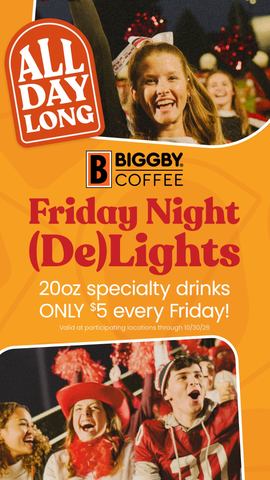
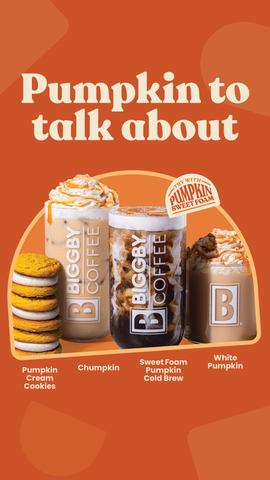
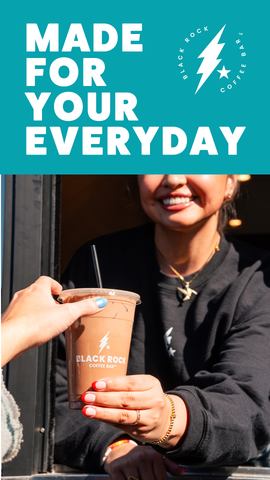


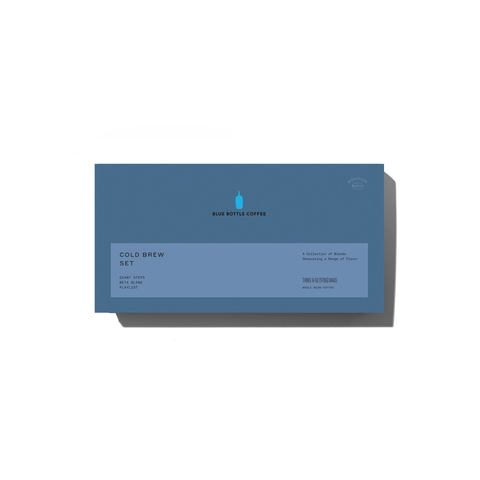
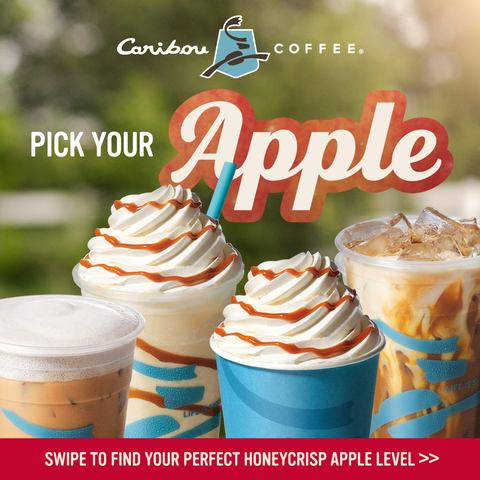

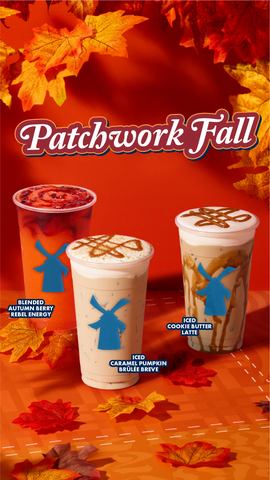


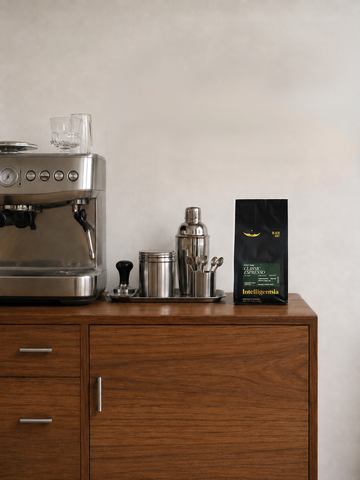
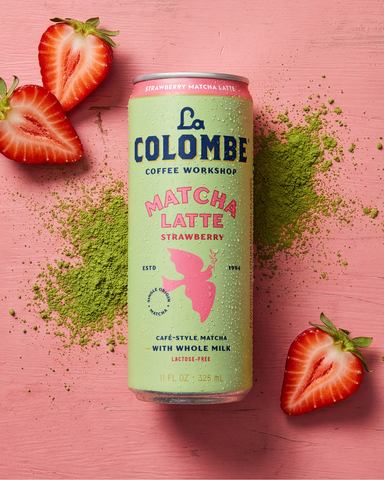


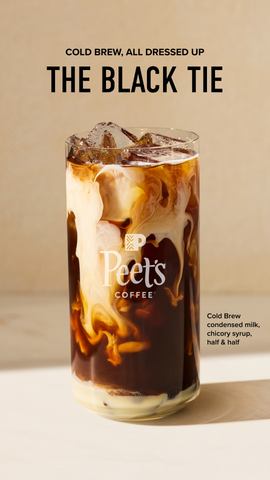

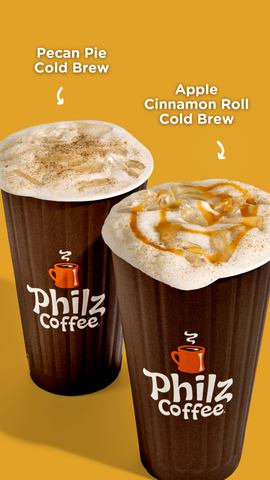


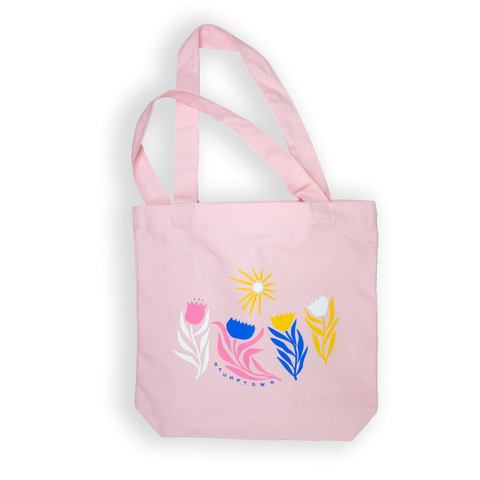
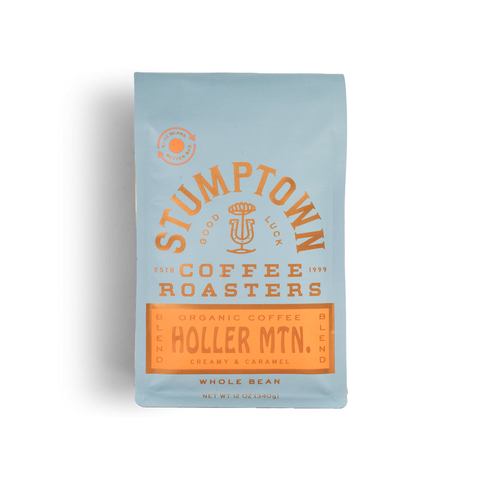
Meta Ad Library, United States · n = 24 · image ads only, two per brand, as counted in the second essay · tied layouts: full-bleed image · copy top centered; framed image · copy top centered; full-bleed image · no copy
Figure 2. Hollowmere Coffee: the 24 real coffee-shop ads and ten outputs per model. Pick a stop; nothing was discarded.
Layout. The real row does not pile up. Five layouts, three of them tied at 7 of 24, the fullest box one cell above what chance would give. Seven of the 24 carry no words at all: a bag of coffee, a can, a gift card, a tote. The 40 generated use six layouts, 18 of 40 in one and 31 in two: GPT ten of ten, Recraft nine, Nano Banana six, Seedream three and three. Zero of 40 without words, because the brief demanded a headline. That is my doing, and it means the one thing real coffee shops do most freely is the one thing the machines could not.

FIGURE 5b · Coffee shops, the line chance does not cross.
Same drawing for the coffee shop: real coffee-shop ads (24) above, generated (40) below. The real row has no single fullest layout, so the black run is one of the three tied at the top.
Chance line 6 and 8; the real row reaches 7 of 24 (three layouts tied), the generated pile 18 of 40.
Figure 6b, same layout: the real coffee-shop strips on top, each model's ten under them.
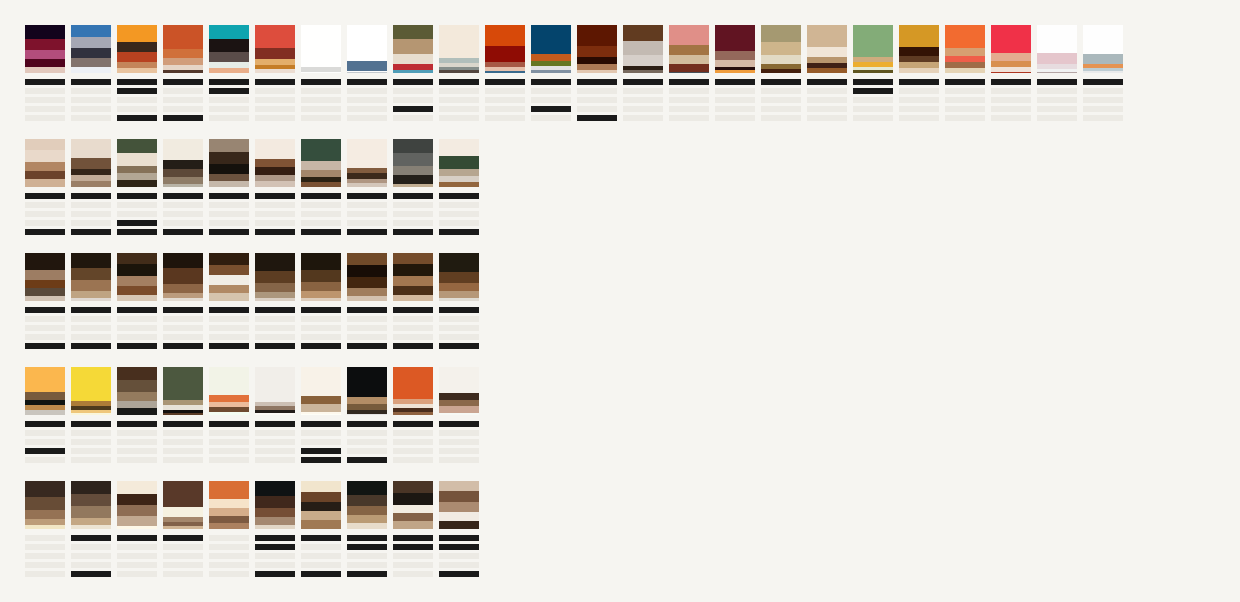
FIGURE 6b · Coffee shops, color and elements, real beside machine.
Same drawing for the coffee shop: the real coffee-shop row of 24, then ten per model in the same order. Bars as in the SaaS figure.
Real: warm 15 of 24, 4 dominant hues; serif headline 3 of 24, no copy at all 7 of 24. GPT Image and Nano Banana warm 10 and 10 of 10; serif 10 of 10 GPT Image, 10 of 10 Seedream.
Color. Real coffee shops are warm, 15 of 24, with 4 cool and 5 neutral. GPT and Nano Banana went brown, ten of ten each; Recraft and Seedream, seven of ten warm. Here the models are close to the room.
What is in the picture. Real: a photo in 24 of 24, the product in 22, a person in 3, a device in none. Machine: product in 40 of 40, a person in 4, all Nano Banana. The typeface is where they part. Real headlines are mostly a big display face, 10 of 24, with 3 in a serif and 7 with no headline. The machines set 27 of 40 in a serif; GPT and Seedream, ten of ten each.
Copy and call to action. Words at the top, centered: 14 of 24 real, 31 of 40 generated. A CTA button is rare on both sides: 2 of 24 real, 3 of 40 generated. I did not count whether the headline came out letter for letter.
Do they copy the real average? Same five decisions, against the most common real coffee-shop choice. A real ad differs on 1.2 of five; a generated one on 1.4 (GPT and Recraft 1.0, Seedream and Nano Banana 1.8). On this brief the machines are about as close to the real average as the real ads are. The difference is the spread: 24 real ads, 14 different combinations; GPT's ten, one combination ten times.
What the two briefs say together
Figures 5a and 5b put the piles on one line each: one cell per ad, ink for the fullest layout, a hollow mark where chance would land one time in twenty. Real SaaS clears it by a lot. Real coffee shops barely touch it. Both machine tracks clear it mixed, and by model two of the four are deeper than any real row I have.
The models do not copy the average real ad. On SaaS they land further from it than real ads do; on coffee, about as close. Either way, each model has its own average ad and repeats it: a blue photo of a worker with a tablet, a brown serif card with a bun. The real rows give 17 and 14 combinations; GPT gives two and one. The one decision all four models and both real rows share is the words at the top, centered, 62 of 80 generated. And where real coffee shops let seven ads in 24 say nothing, the machines always put a headline at the top.
The best answer is that the model did what I asked. I typed "ad" and got the most recognizable version of an ad; twenty of twenty is the model working, not failing. That defense is about reading. The count is about the moment before anyone decides whether to look. If the brief is one line, the brief is the design, and a one-line brief is the average on request. Not the human average. The model's own.
Four papers mark where the evidence stops, and none is about ads. Doshi and Hauser (2024): stories written with ideas from GPT-4 were rated better one by one and more alike as a set. Anderson, Shah and Kreminski (2024): people brainstorming with a chatbot landed closer to the group's average, because the model suggested the same ideas to everyone. Shumailov and colleagues (Nature, 2024): a model retrained on its own output loses its rare cases first. Alemohammad and colleagues (ICLR 2024): image models run in loops lose variety faster when the loop favors the typical.
Five questions before you type the brief
Whose average is this, the market's or the model's? Real SaaS ads came in 17 combinations out of 26; the model's ten came in two.
Which tool, and what does it do every time? One here gave the same layout 20 times out of 20; ask for ten and look at the layouts first.
Would this ad pass with the brand covered, next to two competitors'? Every model answered the SaaS brief in one color, and three of the four picked blue.
What did the brief name? The model draws the nouns: "field crews" became a vest and a tablet, 20 times.
How long is the brief? If you typed a line, you ordered the average.
Sources
Four papers, all read in full, all peer-reviewed. None is about advertising, none is about layout, and none gives several image models the same brief. They are in to mark where the evidence stops. Every number about the ads is mine.
Doshi, A. R. & Hauser, O. P. (2024). "Generative AI enhances individual creativity but reduces the collective diversity of novel content." Science Advances 10(28), eadn5290. DOI 10.1126/sciadv.adn5290. 293 writers, 600 evaluators, 3,519 evaluations; the similarity result, b = 0.871 with one idea and 0.718 with five, Results, "Similarity of stories." Preregistered. Short fiction; the authors say images may differ.
Anderson, B. R., Shah, J. H. & Kreminski, M. (2024). "Homogenization Effects of Large Language Models on Human Creative Ideation." Creativity and Cognition '24, ACM. DOI 10.1145/3635636.3656204. 33 participants, 1,271 ideas; group-level homogenization d = .47, 95 % CI [.00, .07], §4.1.2; the "samey" sentence, §5.5. Text ideation with one model; no images.
Shumailov, I., Shumaylov, Z., Zhao, Y., Papernot, N., Anderson, R. & Gal, Y. (2024). "AI models collapse when trained on recursively generated data." Nature 631, 755–759. DOI 10.1038/s41586-024-07566-y. Definition 2.1 and the tails result, pp. 755–757. A 125M-parameter language model over nine generations; no text-to-image model.
Alemohammad, S., et al. (2024). "Self-Consuming Generative Models Go MAD." ICLR 2024 (poster). arXiv:2307.01850. DOI 10.48550/arXiv.2307.01850. The sampling-bias result, §3.4, Figs. 6 and 7 of the arXiv v1. StyleGAN-2 on faces at 128 × 128, DDPM on digits. The bias is a truncation parameter, not a person choosing.
What I could not verify
The ICLR camera-ready of Alemohammad et al. Both OpenReview routes returned an error page; section and page numbers above are from arXiv v1.
The supplementary materials of Doshi and Hauser (tables S3, S5, S7, S11). Every figure quoted is from the main text, which cites them.
The supplementary information of Shumailov et al. The main text's statements are quoted as the main text states them.
The ACM Digital Library version of Anderson, Shah and Kreminski. Read from arXiv v2, which carries the ACM header and DOI.
El experimento
La vez pasada conté 246 anuncios reales, y 108 ponían las palabras arriba, al centro, sobre una imagen. Escribí que esa estructura ya era material de entrenamiento y aposté a que las herramientas la devolverían a pedido. Así que les pregunté a las herramientas.
Dos briefs, de una línea cada uno, una marca inventada y un titular que el anuncio tenía que llevar. Sin plataforma, sin estructura, sin foto, sin color, sin tono. Eso tiene un costo: Anderson, Shah y Kreminski encontraron en 2024 que los briefs cortos dan resultados «samey» (iguales entre sí), porque el modelo llena cada hueco con su valor más probable. Lo usé igual. Es el brief que escribe una persona de marketing.
Cuatro modelos de imagen con IA de cuatro laboratorios: Seedream 5 Pro, GPT Image 2.5, Recraft V4.1 y Nano Banana Pro de Google, el modelo de imagen detrás de Gemini. 13 de octubre de 2026, diez imágenes por modelo y por brief, 80 en total, el mismo texto palabra por palabra, nada descartado. Las leí a ciegas, como leí los 246: archivos renombrados, clave sellada, cada anuncio clasificado en una de catorce estructuras. Andrés releyó 16 a ciegas y coincidimos en 12; donde él midió un marco que yo no había visto, vale su lectura. Las imágenes de Nano Banana llegaron después de abrir la clave de las primeras 60, así que al leerlas ya sabía la herramienta. La calidad no se mide: «slop» es una queja sobre el acabado, y esto va de lo que hace la herramienta antes del acabado.
Brief 1 · Shiftmoor (SaaS B2B)
El brief, tal como se envió:
Make a square social media ad for Shiftmoor, a scheduling tool for field crews. The ad must include the brand name "Shiftmoor" and this headline, written exactly as shown: "Tomorrow's crews, sorted tonight."
Figura 1: arriba, 26 anuncios reales de software B2B de 13 empresas; abajo, 40 generados, cuatro líneas de diez, una por modelo. Lee primero la fila real, y después cada línea por su cuenta.
Reales · 26 anuncios reales de SaaS B2B de 13 marcas
17 de 26 en una estructura: imagen enmarcada · copy arriba al centro · 11 marcas · 8 estructuras en total
LinkedIn Ad Library, Estados Unidos · n = 26 · solo anuncios gráficos, dos por marca, como se contaron en el segundo ensayo
Figura 1. Shiftmoor, SaaS B2B: los 26 anuncios reales y diez salidas por modelo. Elige una parada; nada se descartó.
Estructura. La fila real es la pila más honda de mi archivo: 17 de 26 en una sola estructura, imagen enmarcada, palabras arriba, al centro. Los 40 generados, mezclados, usan ocho estructuras y la más llena tiene 16 de 40, una pila menos honda. Pero nadie usa cuatro herramientas. Línea por línea: GPT Image 2.5, una estructura, diez de diez; Recraft V4.1, ocho de diez; Seedream 5 Pro, seis estructuras en diez.
FIGURE 5a · SaaS, the line chance does not cross.
Una celda por anuncio, tinta para la estructura más llena, marca hueca en la línea del azar.
Figura 6a: cada anuncio como una tira con sus cinco colores principales, la fila real arriba y los diez de cada modelo debajo; bajo cada tira, cinco marcas para lo que hay en el anuncio.
FIGURE 6a · SaaS, color and elements, real beside machine.
Arriba: la paleta dominante de cada uno de los 26 anuncios reales. Abajo: los diez de cada modelo. Después, una fila de recuentos: foto o ilustración, una persona con un dispositivo, un botón de CTA, la tipografía del titular.
Color. La fila real no tiene color: 14 de 26 son neutros y los tonos dominantes se reparten en siete familias. Tres de los cuatro modelos respondieron en azul, Nano Banana diez de diez. Recraft respondió en naranja, nueve de diez. Una paleta por modelo; varias por fila real.
Qué hay en la imagen. La fila real se parte en tres: diez fotos, ocho ilustraciones, siete sin imagen. GPT, foto diez de diez. Recraft, ilustración diez de diez. Un operario con una tableta en diez de diez de GPT y diez de diez de Nano Banana; seis de 26 anuncios reales muestran algún dispositivo. Tipografía: sans de los dos lados.
Copy y llamada a la acción. Palabras arriba, al centro: 17 de 26 reales, 31 de 40 generados. Un botón de CTA aparece en 14 de 26 anuncios reales; GPT cero de diez, Nano Banana dos, Recraft siete, Seedream seis.
¿Copian el promedio real? Revisé cinco decisiones en cada anuncio contra la elección más común de la fila real: estructura, foto o ilustración, cálido o frío, persona o no, tipografía. Los anuncios reales pasaron por la misma revisión. Un anuncio real de SaaS se aparta de la elección más común de su fila en 1,8 de cinco, en promedio; uno generado, en 2,5. Así que no: quedan más lejos del promedio real que los propios anuncios reales. Los 26 reales producen 17 combinaciones distintas de esas cinco decisiones; los diez de GPT producen dos. Las diferencias son el brief al pie de la letra: un chaleco, una tableta, un fondo azul, cada vez.
Brief 2 · Hollowmere Coffee (cafetería)
El brief:
Make a square social media ad for Hollowmere Coffee, a neighborhood coffee shop on Ferrow Hill that bakes its cardamom buns every morning. The ad must include the brand name "Hollowmere Coffee" and this headline, written exactly as shown: "Warm by six. Gone by nine."
Figura 2: 24 anuncios reales de cafeterías de 12 marcas, sacados de la Meta Ad Library el mismo día (7 Brew, Biggby, Black Rock, Blue Bottle, Caribou, Dutch Bros, Intelligentsia, La Colombe, Peet's, Philz, Scooter's, Stumptown), sobre las mismas cuatro líneas de diez.
Reales · 24 anuncios reales de cafeterías de 12 marcas
Sin una estructura más llena: tres empatadas en 7 de 24 · 5 estructuras en total
Meta Ad Library, Estados Unidos · n = 24 · solo anuncios gráficos, dos por marca, como se contaron en el segundo ensayo · estructuras empatadas: imagen a sangre · copy arriba al centro; imagen enmarcada · copy arriba al centro; imagen a sangre · sin copy
Figura 2. Hollowmere Coffee: los 24 anuncios reales de cafeterías y diez salidas por modelo. Elige una parada; nada se descartó.
Estructura. La fila real no se apila. Cinco estructuras, tres de ellas empatadas en 7 de 24, la casilla más llena una celda por encima de lo que daría el azar. Siete de los 24 no llevan ni una palabra: una bolsa de café, una lata, una tarjeta de regalo, una bolsa de tela. Los 40 generados usan seis estructuras, 18 de 40 en una y 31 en dos: GPT diez de diez, Recraft nueve, Nano Banana seis, Seedream tres y tres. Cero de 40 sin palabras, porque el brief exigía un titular. Eso es cosa mía, y significa que lo que las cafeterías reales hacen con más libertad es lo único que las máquinas no podían hacer.
FIGURE 5b · Coffee shops, the line chance does not cross.
Una celda por anuncio, tinta para la estructura más llena, marca hueca en la línea del azar.
Figura 6b, mismo armado: las tiras de las cafeterías reales arriba, los diez de cada modelo debajo.
FIGURE 6b · Coffee shops, color and elements, real beside machine.
Arriba: la paleta dominante de cada uno de los 24 anuncios reales. Abajo: los diez de cada modelo. Después, los recuentos: producto a la vista, una persona, un botón de CTA, la tipografía del titular.
Color. Las cafeterías reales son cálidas, 15 de 24, con 4 frías y 5 neutras. GPT y Nano Banana se fueron al marrón, diez de diez cada uno; Recraft y Seedream, siete de diez cálidos. Aquí los modelos están cerca de la sala.
Qué hay en la imagen. Reales: una foto en 24 de 24, el producto en 22, una persona en 3, un dispositivo en ninguno. Máquina: producto en 40 de 40, una persona en 4, todas de Nano Banana. La tipografía es donde se separan. Los titulares reales van casi siempre en una display grande, 10 de 24, con 3 en serif y 7 sin titular. Las máquinas pusieron 27 de 40 en serif; GPT y Seedream, diez de diez cada uno.
Copy y llamada a la acción. Palabras arriba, al centro: 14 de 24 reales, 31 de 40 generados. El botón de CTA es raro de los dos lados: 2 de 24 reales, 3 de 40 generados. No conté si el titular salió letra por letra.
¿Copian el promedio real? Las mismas cinco decisiones, contra la elección más común de las cafeterías reales. Un anuncio real se aparta en 1,2 de cinco; uno generado, en 1,4 (GPT y Recraft 1,0, Seedream y Nano Banana 1,8). En este brief las máquinas quedan más o menos tan cerca del promedio real como los anuncios reales. La diferencia es la dispersión: 24 anuncios reales, 14 combinaciones distintas; los diez de GPT, una combinación diez veces.
Lo que dicen los dos briefs juntos
Las figuras 5a y 5b ponen las pilas en una línea cada una: una celda por anuncio, tinta para la estructura más llena, una marca hueca donde el azar caería una vez de cada veinte. El SaaS real la pasa por mucho. Las cafeterías reales apenas la tocan. Las dos pistas de máquina la pasan mezcladas, y por modelo dos de los cuatro son más hondos que cualquier fila real que tengo.
Los modelos no copian el anuncio real promedio. En SaaS quedan más lejos de él que los anuncios reales; en café, más o menos igual de cerca. Sea como sea, cada modelo tiene su propio anuncio promedio y lo repite: una foto azul de un operario con una tableta, una tarjeta marrón en serif con un bollo. Las filas reales dan 17 y 14 combinaciones; GPT da dos y una. La única decisión que comparten los cuatro modelos y las dos filas reales son las palabras arriba, al centro, 62 de 80 generados. Y donde las cafeterías reales dejan que siete anuncios de 24 no digan nada, las máquinas siempre ponen un titular arriba.
La mejor respuesta es que el modelo hizo lo que le pedí. Escribí «ad» y recibí la versión más reconocible de un anuncio; veinte de veinte es el modelo funcionando, no fallando. Esa defensa es sobre leer. La cuenta es sobre el momento anterior a que alguien decida si mira. Si el brief es una línea, el brief es el diseño, y un brief de una línea es el promedio a pedido. No el promedio humano. El propio del modelo.
Cuatro artículos marcan dónde se acaba la evidencia, y ninguno va de anuncios. Doshi y Hauser (2024): los cuentos escritos con ideas de GPT-4 fueron mejor calificados uno por uno y más parecidos entre sí como conjunto. Anderson, Shah y Kreminski (2024): la gente que hacía lluvia de ideas con un chatbot quedó más cerca del promedio del grupo, porque el modelo le sugería las mismas ideas a todos. Shumailov y colegas (Nature, 2024): un modelo reentrenado con su propia salida pierde primero los casos raros. Alemohammad y colegas (ICLR 2024): los modelos de imagen puestos en bucle pierden variedad más rápido cuando el bucle favorece lo típico.
Cinco preguntas antes de escribir el brief
¿De quién es este promedio, del mercado o del modelo? Los anuncios reales de SaaS vinieron en 17 combinaciones de 26; los diez del modelo, en dos.
¿Qué herramienta, y qué hace cada vez? Una de estas dio la misma estructura 20 veces de 20; pide diez y mira primero las estructuras.
¿Pasaría este anuncio con la marca tapada, junto a dos de la competencia? Cada modelo respondió el brief de SaaS en un solo color, y tres de los cuatro eligieron el azul.
¿Qué nombró el brief? El modelo dibuja los sustantivos: «field crews» se volvió un chaleco y una tableta, 20 veces.
¿Qué tan largo es el brief? Si escribiste una línea, pediste el promedio.
Fuentes
Cuatro artículos, los cuatro leídos enteros, los cuatro con revisión por pares. Ninguno va de publicidad, ninguno va de estructura, y ninguno le da el mismo brief a varios modelos de imagen. Están para marcar dónde se acaba la evidencia. Todas las cifras sobre los anuncios son mías.
Doshi, A. R. & Hauser, O. P. (2024). "Generative AI enhances individual creativity but reduces the collective diversity of novel content." Science Advances 10(28), eadn5290. DOI 10.1126/sciadv.adn5290. 293 writers, 600 evaluators, 3,519 evaluations; the similarity result, b = 0.871 with one idea and 0.718 with five, Results, "Similarity of stories." Preregistered. Short fiction; the authors say images may differ.
Anderson, B. R., Shah, J. H. & Kreminski, M. (2024). "Homogenization Effects of Large Language Models on Human Creative Ideation." Creativity and Cognition '24, ACM. DOI 10.1145/3635636.3656204. 33 participants, 1,271 ideas; group-level homogenization d = .47, 95 % CI [.00, .07], §4.1.2; the "samey" sentence, §5.5. Text ideation with one model; no images.
Shumailov, I., Shumaylov, Z., Zhao, Y., Papernot, N., Anderson, R. & Gal, Y. (2024). "AI models collapse when trained on recursively generated data." Nature 631, 755–759. DOI 10.1038/s41586-024-07566-y. Definition 2.1 and the tails result, pp. 755–757. A 125M-parameter language model over nine generations; no text-to-image model.
Alemohammad, S., et al. (2024). "Self-Consuming Generative Models Go MAD." ICLR 2024 (poster). arXiv:2307.01850. DOI 10.48550/arXiv.2307.01850. The sampling-bias result, §3.4, Figs. 6 and 7 of the arXiv v1. StyleGAN-2 on faces at 128 × 128, DDPM on digits. The bias is a truncation parameter, not a person choosing.
Lo que no pude verificar
La versión definitiva de Alemohammad et al. en ICLR. Las dos rutas de OpenReview devolvieron una página de error; las secciones y páginas de arriba son de la v1 de arXiv.
Los materiales suplementarios de Doshi y Hauser (tablas S3, S5, S7, S11). Cada cifra citada viene del texto principal, que las cita.
La información suplementaria de Shumailov et al. Las afirmaciones del texto principal se citan como el texto principal las enuncia.
La versión de la ACM Digital Library de Anderson, Shah y Kreminski. Leída desde la v2 de arXiv, que lleva el encabezado y el DOI de la ACM.